
6 min read
What each fuel-saving habit is actually worth on one truck
Every fuel-saving tip priced against one truck's year: 108,000 miles at 6.4 mpg and diesel at $6.29, ranked by what it pays, with the arithmetic shown.
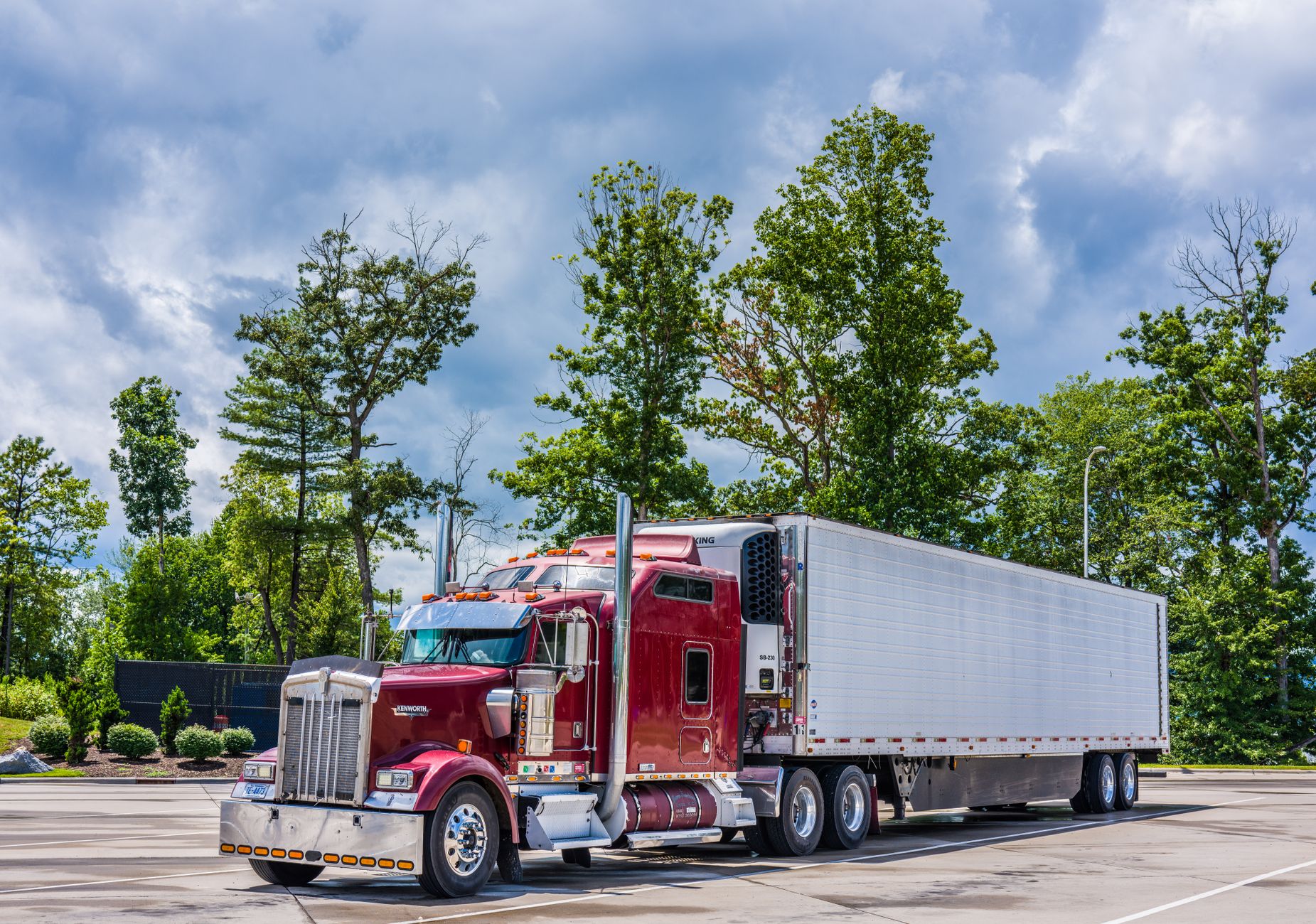
On one truck running about 108,000 miles a year, with diesel at $6.29 a gallon, the fuel levers rank like this: where you buy is worth roughly $4,200 a year, road speed about $3,200, out-of-route miles about $2,100, a tenth of a mile per gallon about $1,600, and an idle hour a night about $1,200. The biggest one is still the one you pull yourself at the desk, not the one you ask your driver for — but it is no longer the runaway it was, and the reason why is the most useful thing here. Every rate below is a number you should measure off your own fuel card and your own idle report. Do not take any of them on faith, including these.
The truck in this post
One truck. 108,000 miles a year. 6.4 miles per gallon. Diesel at $6.29, the national average for the week ending September 14. That is an example, not your truck.
- 108,000 ÷ 6.4 = 16,875 gallons
- 16,875 × $6.29 = $106,143.75 of diesel for the year
- $106,143.75 ÷ 108,000 = 98.28 cents a mile, call it 98.3 cents
That 98.3 cents is before tires, before insurance, before the payment, before a dime of driver pay. It is the single largest line in the truck, so a percent of it is real money and a tip that moves it half a percent is not worth a phone call.
The five levers, priced
Where you buy
Twenty-five cents a gallon cheaper across the whole year, on 16,875 gallons:
- 16,875 × $0.25 = $4,218.75
That is the top of the list and nobody has to drive differently. It comes from the discount network on your fuel card, from knowing which stops on your lanes price well, and from telling the driver where to fill.
Pump price is not your price. Read the card statement, not the sign.
And here is the thing that changed when diesel went over six dollars. Twenty-five cents off a gallon saves you $4,218.75 whether diesel is $3.92 or $6.29. Cents off is cents off; it does not grow when the price does. Every other lever below saves gallons, and a gallon now costs 60 percent more than it did. That is why buying right used to be worth more than double what slowing down was worth, and today it is barely ahead of it.
Out-of-route miles
Miles you run that the load did not call for. The carrier pays on calculated miles, so these earn nothing and burn fuel.
Four percent of the year:
- 108,000 × 4% = 4,320 miles
- 4,320 ÷ 6.4 = 675 gallons
- 675 × $6.29 = $4,245.75
Cut four percent to two percent and you keep half of it: $2,122.88, on zero revenue lost. You find these by comparing settlement miles against the odometer for the same week.
A tenth of a mile per gallon
6.4 to 6.5, same miles:
- 108,000 ÷ 6.5 = 16,615.38 gallons
- 16,875 − 16,615.38 = 259.62 gallons saved
- 259.62 × $6.29 = $1,633.01 a year
That is $31.40 a week. Write that on a sticky note; it settles arguments about equipment. A set of trailer skirts or fairings that truly gains you a tenth pays back $1,633 a year, so $3,000 of parts and labor is under two years. At $3.92 diesel the same set took nearly three. Equipment that was marginal a year ago is worth pricing again.
Idle hours
Figure roughly three quarters of a gallon an hour at idle. Check your own idle report, because an APU, a bunk heater, or a newer engine changes it a lot.
Two hours a night, 250 nights:
- 0.75 × 2 = 1.5 gallons a night
- 1.5 × 250 = 375 gallons
- 375 × $6.29 = $2,358.75 a year, $9.44 a night
Here is what that does to the number you read. Hold the road at 6.4 and add those 375 gallons:
- 16,875 + 375 = 17,250 gallons
- 108,000 ÷ 17,250 = 6.26 mpg
So the card says 6.26 on a truck whose driver did nothing wrong on the road. If your 6.4 already comes off the fuel card, your road number is better than 6.4 and the idle is already baked into the $106,143.75 — either way, an hour a night is worth $1,179.38.
Three miles an hour of road speed
Dropping from 65 to 62 gains maybe two tenths on a lot of trucks. Two tenths, 6.4 to 6.6:
- 108,000 ÷ 6.6 = 16,363.64 gallons
- 16,875 − 16,363.64 = 511.36 gallons
- 511.36 × $6.29 = $3,216.45 a year
Now the other side of it:
- 108,000 ÷ 65 = 1,661.5 driving hours
- 108,000 ÷ 62 = 1,741.9 driving hours
- 1,741.9 − 1,661.5 = 80.4 hours, about an hour and a half a week
You are selling 80 hours of clock for $3,216.45, about $40 an hour. If the truck sat anyway, that is a good trade. If slowing down costs you one reload a month because the driver runs out of hours short of the shipper, it is a bad trade. Decide it with both numbers in front of you, not with one.
Stacking the four you can realistically get
Same truck, same year, four changes you can actually hold onto:
| Change | Gallons | Dollars |
|---|---|---|
| Two tenths of mpg, 6.4 to 6.6 | 511.36 | $3,216.45 |
| One idle hour a night, 250 nights | 187.50 | $1,179.38 |
| Out-of-route from 4% to 2% | 337.50 | $2,122.88 |
| 25 cents a gallon on price | — | $4,218.75 |
| Total | $10,737.46 |
Check the two lines that are not obvious: 0.75 × 1 × 250 = 187.5 gallons, and 187.5 × $6.29 = $1,179.38. Out-of-route: 2,160 miles ÷ 6.4 = 337.5 gallons, and 337.5 × $6.29 = $2,122.88.
- $10,737.46 ÷ $106,143.75 = 10.1 percent of the fuel bill
- $10,737.46 ÷ 52 = $206.49 a week
Treat that as a ceiling, not a promise. Each change shrinks the gallons the next one works on, so all four together land a little under the straight sum.
Which levers are yours and which are the driver's
Sort the list by whose hands are on it.
Yours: price per gallon and out-of-route miles. That is $4,218.75 plus $2,122.88, $6,341.63 between them, and you pull both from the kitchen table. You pick the stops, you set the fuel card network, you check settlement miles against the odometer every Friday and ask about the gaps.
The driver's: idle and speed. That is $1,179.38 plus $3,216.45, closing on yours at this price, and you cannot make either one happen with a rule you do not enforce or a lecture on Sunday night.
That split tells you what to do with each. Fuel on the carrier's card is your expense, deducted on your settlement, and it has nothing to do with what you owe the driver — you cannot dock a 1099 driver for a bad mpg week, and you should not try. If you want the idle number, put it on the pay sheet as a bonus line: a flat amount for a week under an idle percentage you both read off the same report. Run it through your driver pay calculator like any other bonus. Speed is usually a phone call, not a bonus, because slowing down costs the driver paid miles and hours and he knows it — so that conversation has to include what he gets out of it.
And write your fuel rules down once, in the same place as your rule on whether you pay the driver for empty miles, and apply them the same way every week.
This week
Pull twelve months of fuel card statements and one idle report, and get four numbers: gallons, miles, average price paid, and idle percentage. If your loads and fuel slips already live in one place, a fuel report totals the first three per truck. Then compare last week's settlement miles to the odometer and find your out-of-route percent. If your average price is more than a dime above the best stop on your regular lane, fix that first, this week, before you shop for fairings.